

Personal Trainers Insurance Online :: News
SHARE

Share this news item!

Vitruvian's $21.8M Boost: Transforming Home Fitness with AI

Perth Startup's Innovative Approach to Personal Training Equipment

Vitruvian's $21.8M Boost: Transforming Home Fitness with AI?w=400

The information on this website is general in nature and does not take into account your objectives, financial situation, or needs. Consider seeking personal advice from a licensed adviser before acting on any information.

Perth-based home fitness startup Vitruvian has successfully raised $21.8 million in an internal extension of its previous funding round.
This latest investment, comprising contributions from existing investors, builds upon the company's $21 million Series A raise in 2022, which was led by Larsen Ventures and Ten13.

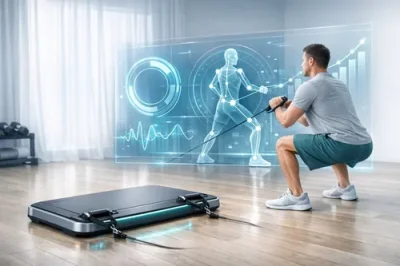
Vitruvian specialises in creating portable and adaptable gym equipment for home use. Their flagship product, the Trainer+, is an all-in-one home gym solution that combines minimal equipment with artificial intelligence to offer a diverse range of exercises with resistance up to 200kg. The accompanying app personalises workouts by adapting to individual user performance, providing a tailored fitness experience.

For personal trainers in Australia, Vitruvian's advancements present both opportunities and challenges. The integration of AI in home fitness equipment could lead to increased competition, as clients may opt for these innovative solutions over traditional training methods. However, trainers can also leverage such technology to enhance their services, offering hybrid training models that combine in-person sessions with AI-driven home workouts.

It's crucial for personal trainers to stay informed about emerging technologies in the fitness industry. Understanding and incorporating these advancements can help maintain a competitive edge and meet the evolving needs of clients. Additionally, trainers should consider the implications of such technologies on their insurance coverage. As training methods diversify, ensuring that insurance policies cover new modes of service delivery becomes essential.

In conclusion, Vitruvian's recent funding success underscores the growing intersection of technology and fitness. Personal trainers should embrace these changes, adapting their practices to incorporate innovative tools while ensuring they have appropriate insurance coverage to protect against potential risks associated with new training modalities.

Published:Friday, 27th Mar 2026
Author: Paige Estritori

Please Note: We do not endorse any specific products or companies. Some content is sourced from third parties, including press releases, and may not be independently verified for accuracy or completeness.

Share this news item:

Rate this article

0 Comments

No comments yet. Be the first to share your thoughts.

Insurance News

Why Severe Weather Planning Matters for Personal Trainers
15 Sep 2026: Paige Estritori
Australia's insurance sector has again turned attention to severe weather readiness, with the coming storm, flood and bushfire seasons expected to test households and small businesses across many regions. For personal trainers, the issue is not limited to property owners or large gyms. A single weather event can interrupt sessions, damage portable equipment, make outdoor locations unsafe, or create client injury risks if training continues in unsuitable conditions. - read more
What New Safety Guidance Means for Personal Trainers
08 Sep 2026: Paige Estritori
Recent fitness sector guidance has again put safe service delivery in the spotlight for personal trainers, particularly as more Australians mix gym-based sessions with outdoor training, small-group classes, online coaching and higher-intensity programmes. The message for exercise professionals is practical rather than alarmist: when client needs are more varied, the systems behind each session matter just as much as the workout itself. - read more
Why NSW Levy Reform Matters for Personal Trainers
01 Sep 2026: Paige Estritori
NSW’s move to redesign the way emergency services are funded has put business insurance affordability back in focus. For personal trainers, bootcamp operators and small studio owners, the issue is more practical than political: when statutory charges are added to premiums, cover can become harder to maintain at the level a growing fitness business actually needs. - read more
Why Fitness Safety Expectations Matter for Personal Trainers
25 Aug 2026: Paige Estritori
Recent Australian fitness sector commentary has again highlighted the importance of practical risk management for exercise professionals, particularly where trainers work across gyms, parks, clients’ homes, community facilities and online programmes. For personal trainers, the message is straightforward: safe practice is not only about meeting professional standards, it is also about being able to show what steps were taken if something goes wrong. - read more
What Insurance Complaint Trends Mean for Personal Trainers
18 Aug 2026: Paige Estritori
Fresh industry attention on the Australian Financial Complaints Authority’s latest complaints data is a useful prompt for personal trainers, fitness instructors and small studio owners to think beyond simply having a policy in place. The figures reinforce a familiar theme across the insurance sector: when customers and insurers fall into dispute, the problem is often not only the outcome of a claim, but the time taken, the quality of communication and the policyholder’s understanding of what is actually covered. - read more


Professionals Insurance Articles

Insurance Considerations When Personal Trainers Hire Staff or Use Contractors
Hiring staff or subcontracting other fitness instructors can change the risk profile of a personal training business. This guide explains insurance issues Australian personal trainers should consider as they move beyond solo work. - read more
Choosing the Right Insurance for Your Personal Training Business
Imagine this: you're wrapping up a successful training session with a client, and suddenly, they mention feeling a sharp pain. You could be on the hook for injuries or dissatisfied services, even when it's not your fault. Does that thought make you uneasy? If you're a personal trainer in Australia, understanding professional indemnity insurance is crucial for your peace of mind and financial security. - read more
Insurance Considerations for Personal Trainers Working in Gyms, Parks, Homes and Online
Where you train clients can change your risk exposure. This guide explains insurance considerations for Australian personal trainers working in gyms, parks, client homes, studios, boot camps and online. - read more
What Personal Trainer Insurance Typically Covers and Excludes
Personal trainer insurance can include several different covers, each designed for different risks. This guide explains what policies commonly cover, where exclusions may apply, and why trainers should review limits, excesses, conditions and disclosure obligations before relying on a policy. - read more
The Critical Role of Professional Indemnity Insurance for Personal Trainers
Professional indemnity insurance is a crucial safeguard for those offering specialist services or advice. It provides protection against claims of negligence or breaches of professional duty, ensuring that professionals like personal trainers are protected in their day-to-day operations. - read more

Knowledgebase
Trauma Insurance:
An insurance that pays a lump-sum amount on the diagnosis of one of several critical illnesses or events